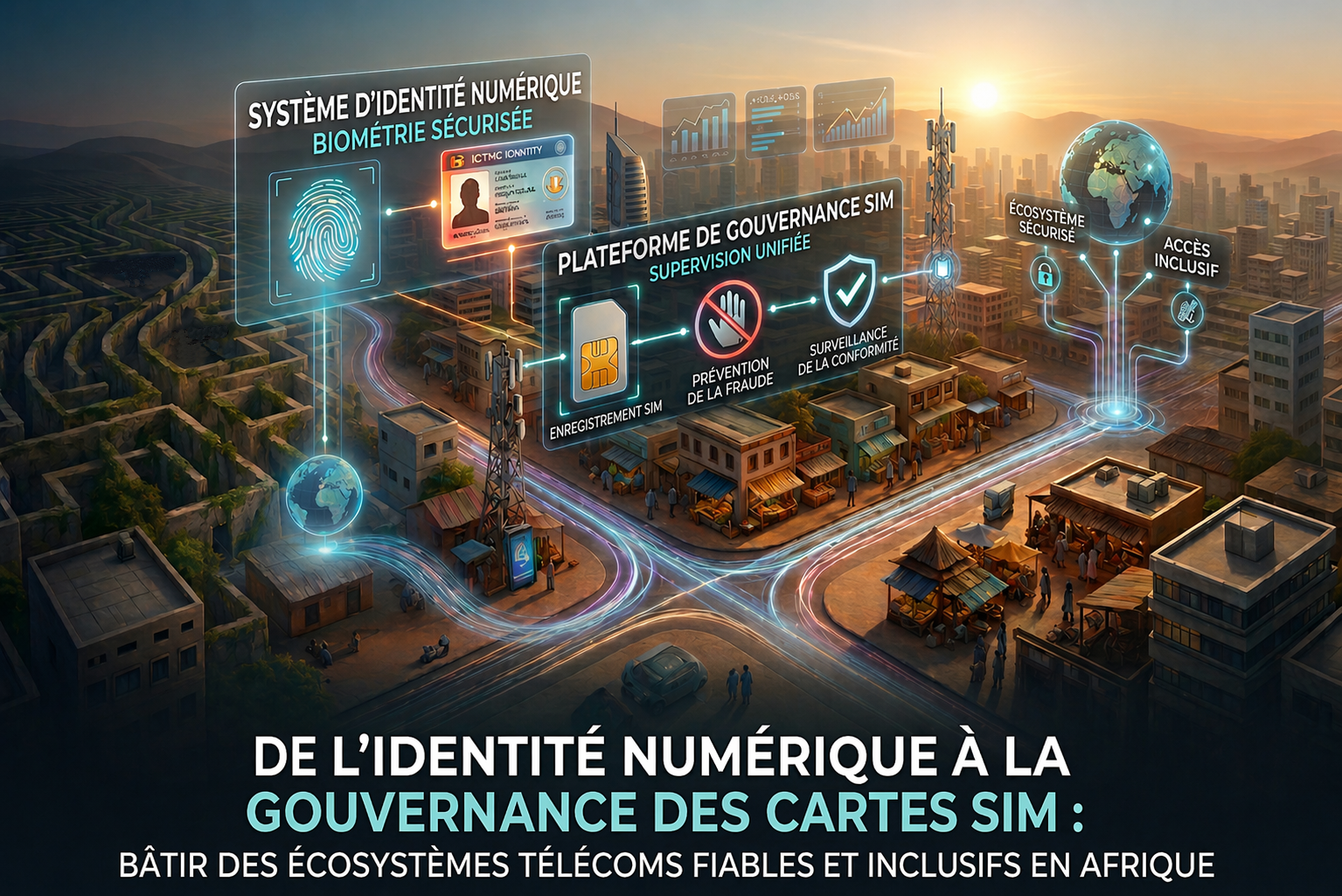
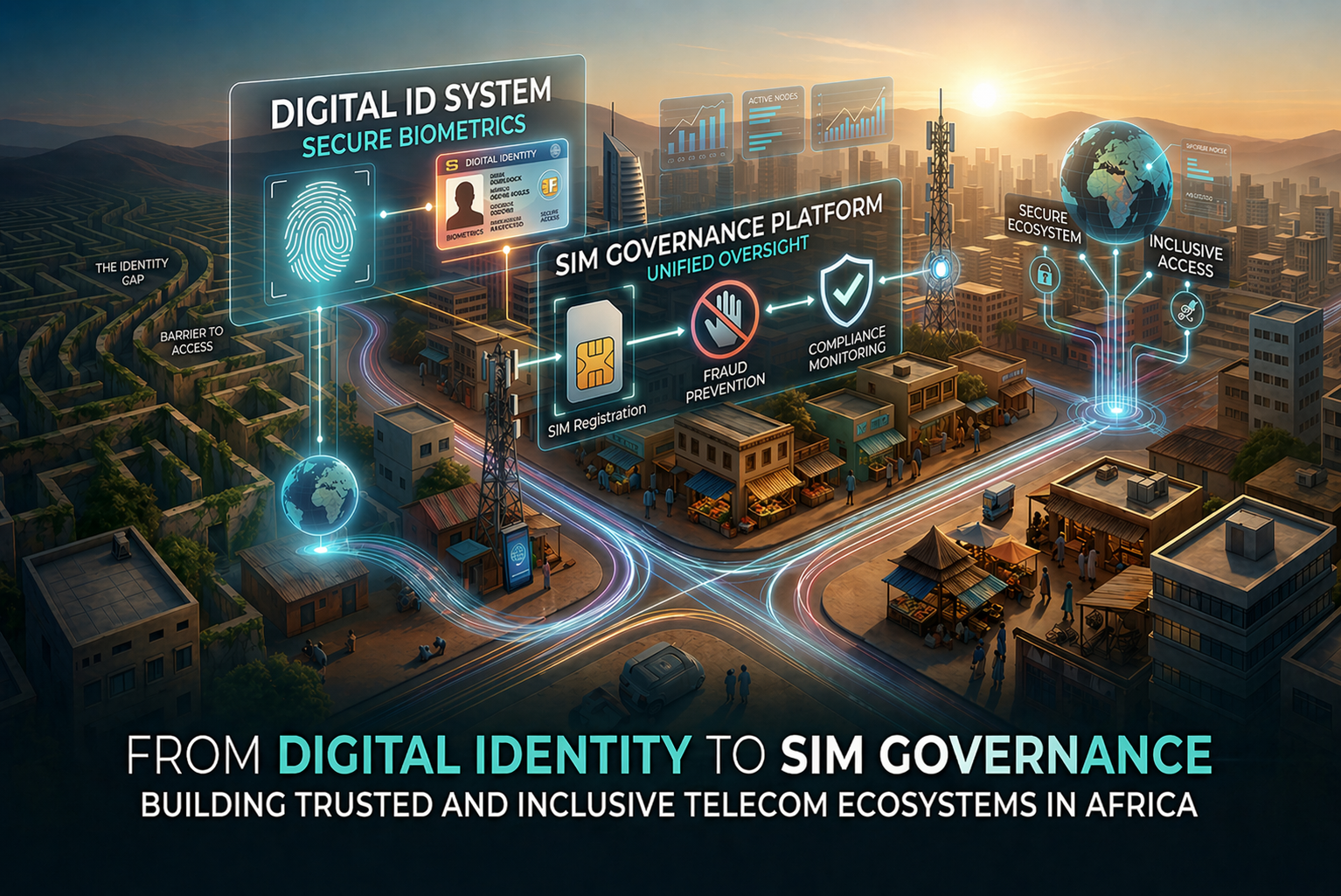
From Digital Identity to SIM Governance: Building Trusted and Inclusive Telecom Ecosystems in Africa
As digital transformation accelerates across Africa, one priority has become central to national development strategies: building trusted digital ecosystems that balance inclusion, security, and sovereignty.
Biometric identity systems and SIM registration frameworks—once deployed as separate initiatives—are now converging into a unified digital infrastructure underpinning telecommunications, financial services, and public service delivery.
Yet, as this convergence deepens, the challenge is no longer technological deployment. It is about governance, oversight, and trust.
A rapidly expanding mobile ecosystem
Africa’s mobile ecosystem is on a strong growth trajectory. As highlighted by GSMA, unique mobile subscribers reached 710 million in 2024 (47% of the population) and are expected to grow to 915 million by 2030, equivalent to 53% penetration—reflecting steady gains in connectivity and digital inclusion.
At the same time, a significant usage gap of over 60% persists—highlighting that connectivity alone does not guarantee digital participation.
This dual dynamic reinforces the strategic importance of two foundational pillars:
- SIM registration, as the entry point to connectivity
- Digital identity systems, as the enabler of authentication and access
Together, they form the backbone of Africa’s digital economy.
The opportunity: from connectivity to governance
The integration of SIM registration and biometric ID systems offers powerful opportunities—particularly when supported by data-driven oversight platforms.
Advanced RegTech solutions enable governments to move beyond basic registration toward active oversight and ecosystem governance:
- Fraud prevention: Detection of SIM box fraud and illicit traffic in real time
- Revenue assurance: Verification of telecom operator declarations and reduction of leakages
- Regulatory visibility: Real-time insights into telecom and mobile money ecosystems
- Quality of service monitoring: Identification of anomalies and enforcement of compliance
These capabilities transform SIM registration from a static compliance exercise into a dynamic instrument of regulatory oversight and economic optimization.
In markets where such frameworks are operational, governments have observed measurable improvements in transparency, compliance, and revenue mobilization. For instance, in Ghana, the deployment of a Centralized SIM registration platform under the Common Platform enabled the telecommunications regulator to independently oversee all SIM registrations nationwide. This significantly enhanced regulatory enforcement and ensured full compliance. As a result, SIM box fraud was nearly eliminated, while security agencies gained access to critical data required to combat SIM-related digital fraud, ultimately fostering a secure and trusted environment for financial transactions.
The inclusion paradox: when identity becomes a barrier
Yet, even as these systems promise inclusion, they can also create new forms of exclusion.
A recent study highlighted by The Conversation shows that biometric ID systems can prevent access to essential services for those unable to enroll.
This challenge becomes even more acute in SIM registration ecosystems. According to the World Bank, as of 2024:
- Only ~45% of countries provide access to a government-recognized digital identity
- 2.8 billion people globally lack the ability to securely authenticate online
This creates a structural paradox:
- SIM registration is required for connectivity
- Connectivity is required for participation in the digital economy
- Yet identity requirements exclude millions from both
Addressing this “identity gap” is therefore not just a policy issue: it is central to digital inclusion.
SIM Registration: security gains vs systemic risks
SIM registration has clear benefits. It helps combat fraud, cybercrime, and illicit communications by linking users to identifiable records. However, without proper safeguards, it can also introduce systemic exposures and structural weaknesses:
1. Centralized Data Exposure
An analysis by IBM highlights critical gaps in mobile infrastructure, particularly eSIM technology, which could allow attackers to clone identities, intercept communications, and access sensitive services.
When SIMs are linked to digital IDs, such breaches extend beyond telecom—they affect entire digital identities.
2. Surveillance and Power Asymmetry
Mandatory SIM registration across many African countries raises concerns about mass data collection and traceability, enabling large-scale monitoring of communications and behaviors.
3. Weak Data Protection Frameworks
According to SABC , many African countries are still developing or strengthening data protection and digital governance frameworks as of 2025, leaving gaps in enforcement and oversight of SIM and identity systems. Many countries struggle with enforcement and lack of public awareness, with only countries like Nigeria, Kenya, and South Africa actively issuing fines.
The missing link: oversight and RegTech
This is where the conversation must shift from technology deployment to regulatory capacity.
Effective oversight requires more than policy—it requires independent, real-time, data-driven monitoring capabilities.
RegTech platforms provide this missing layer by enabling:
- Independent data collection from telecom networks
- Real-time analytics to detect anomalies and non-compliance
- Automated monitoring systems to support regulators’ decision-making
- Cross-sector visibility spanning telecom, mobile money, and financial services
Similarly, in Rwanda, the integration of data monitoring capabilities into the regulatory framework enabled the large-scale capture and analysis of mobile internet traffic, enhancing the accuracy of market metrics and supporting the development of data-driven regulatory oversight.
By transforming raw operational data into actionable intelligence, these systems empower governments to:
- Enforce compliance more effectively
- Reduce fraud and illicit activities
- Ensure fair taxation and revenue collection
- Enhance transparency and accountability
Toward a balanced model: inclusion, security, and trust
The convergence of biometric IDs and SIM registration is inevitable. The question is how to design systems that are:
Inclusive
- Alternative registration pathways for populations without formal IDs
- Progressive onboarding models to reduce exclusion
Secure
- Strong cybersecurity standards across SIM and identity infrastructure
- Continuous monitoring of vulnerabilities
Accountable
- Independent oversight mechanisms
- Transparent data governance frameworks
Data-Driven
- Use of RegTech platforms to provide real-time visibility and evidence-based decision-making
Conclusion: from digital infrastructure to trust infrastructure
Africa is not just building digital systems—it is building trust infrastructure.
The convergence of SIM registration and biometric ID systems has the potential to unlock significant value: enhanced financial inclusion, secure communications, and improved governance. But without strong data-driven oversight, they risk becoming sources of exclusion, vulnerability, and control. The path forward lies in combining identity systems with robust regulatory technology, ensuring that innovation is matched by accountability.
Because ultimately, the success of Africa’s digital transformation will not be measured solely by connectivity metrics but by whether the systems that connect them are secure, inclusive and worthy of trust.