
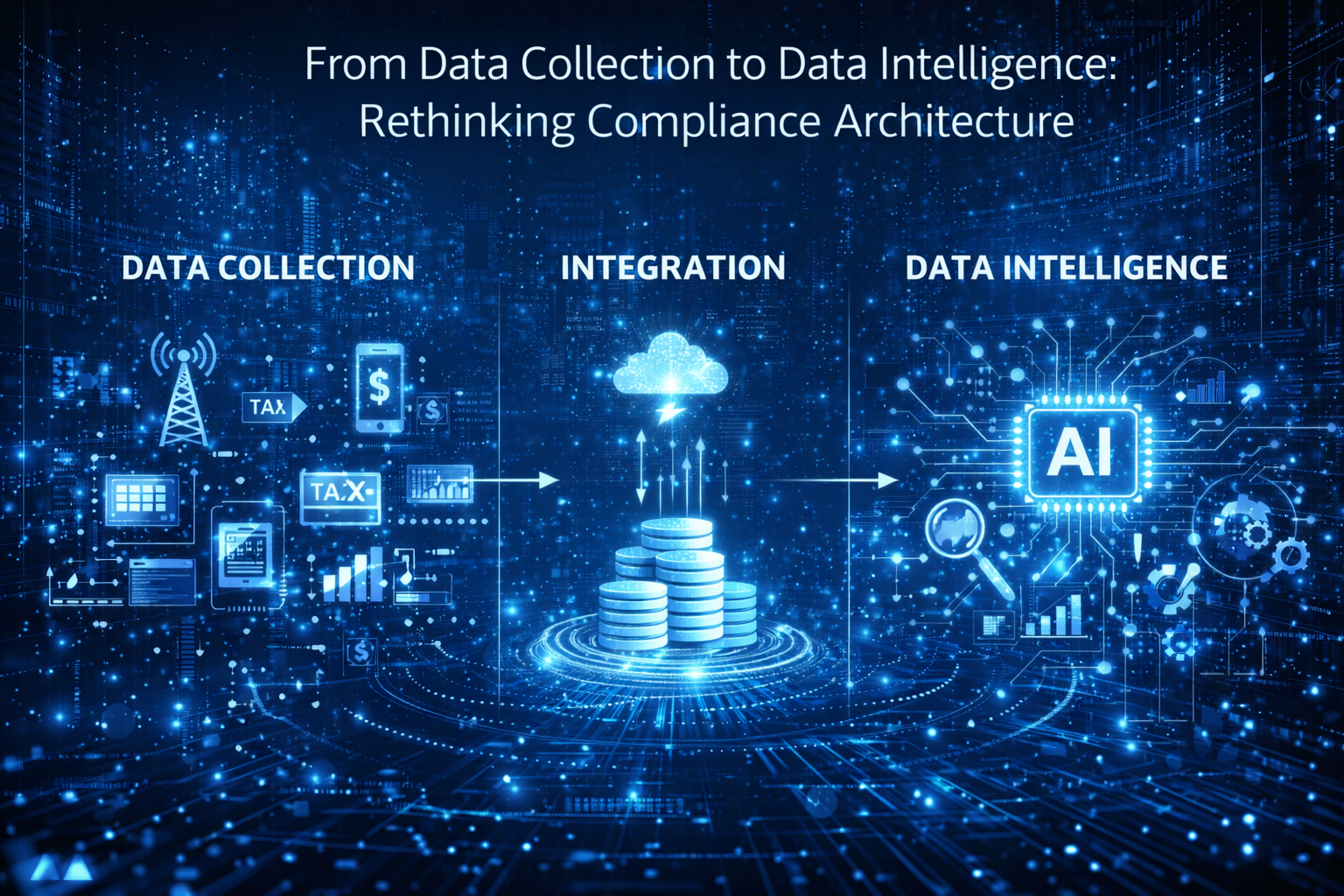
From Data Collection to Data Intelligence: Rethinking Compliance Architecture
The end of “Data for Data’s Sake”
Across the world—and especially in Africa—regulators and governments are collecting more data than at any other point in history. Telecom traffic, mobile money transactions, tax declarations, online platforms—all of these generate enormous amounts of information every second. Yet, despite this wealth of data, enforcement gaps, revenue leakage, and compliance blind spots continue to persist.
The real issue is not the quantity of data but the quality of its structure and use. Collection does not equal intelligence. Without a unifying architecture to integrate and make sense of information, even the most extensive datasets remain underutilised.
Revenue leakage, for instance, can arise from billing errors, unrecorded sales, process inefficiencies, or currency mismanagement. Detecting these leaks requires more than traditional audits, it demands intelligent systems capable of connecting dots across sectors in real time.
Sub-Saharan Africa offers a striking example of this paradox. By 2026, the region is expected to reach nearly 990 million mobile subscriptions, with mobile money users surpassing 1.1 billion. Yet, data from these activities often remain scattered across multiple systems: siloed, uncollected, or fragmented. Unlocking their combined potential is not just a technical challenge, but a development imperative.
The legacy compliance model: fragmented by design
Historically, regulatory systems evolved in isolation. Telecom oversight, mobile money monitoring, fraud detection, and revenue assurance each grew as separate ecosystems—each optimized for a single function, but rarely designed to communicate with others.
These data silos lead to incomplete insights and slow responses. When information is trapped within departmental boundaries, regulators spend more time reconciling reports than acting on findings. Oversight becomes reactive, not proactive—while operational costs and complexity escalate.
A fragmented compliance architecture also limits the potential for advanced analytics and AI. Without unified, consistent data, predictive insights remain out of reach.
Why more tools don’t solve the problem
In many jurisdictions, the knee-jerk response to compliance challenges is to add new software or dashboards. But more tools do not necessarily mean more transparency. In fact, layering systems without integration only multiplies silos, creating a false sense of control while scaling operational risk.
Regulators need unified visibility, not another interface to navigate. True intelligence requires consolidation, not accumulation.
A new paradigm: the regulatory Data Lake
Enter the regulatory data lake—a foundational shift in how compliance data is managed. Unlike fragmented systems, a data lake offers a centralized, secure repository where all relevant inputs—telecom traffic, mobile transactions, operator reports, and third-party digital data—can coexist in both structured and unstructured form.
Such a system allows for real-time or near-real-time ingestion and standardization, enabling a single source of truth under regulatory control. With this unified foundation, regulators can run advanced analytics, automate reporting, and detect anomalies as they occur.
The benefits for governments are tangible: improved policy design, faster interventions, enhanced collaboration across departments, and lower operational costs.
From visibility to intelligence: the role of AI
Artificial Intelligence (AI) turns the data lake into a decision-support engine. By analyzing patterns across datasets, AI can predict irregularities before they become breaches, identify probable revenue leakages, and prioritize high-risk areas for early intervention.
Key AI capabilities include data cleaning, automated extraction, anomaly detection, and predictive modeling. These functions reduce manual effort, ensure data reliability, and enable data-driven decisions at unprecedented speed and scale.
Yet, AI must remain transparent and explainable—it supports human intelligence rather than replacing it. Trustworthy AI requires traceability, accountability, and human oversight, particularly when used in regulatory contexts.
Practical outcomes for regulators and governments
By consolidating and analyzing data intelligently, regulators gain a new level of agility and foresight. The outcomes are concrete:
- Faster detection of compliance breaches.
- Earlier identification of systemic market risks.
- Reduced dependency on manual audits.
- Evidence-based enforcement and policymaking.
This marks a transition from reactive supervision to proactive governance, where insight drives action instead of reaction.
Governance, trust, and data sovereignty
Any intelligent compliance architecture must address key governance questions: who owns the data, where it is hosted, and who controls the algorithms that shape decisions.
Sustainable digital governance requires clear principles:
- Regulatory ownership of national data.
- Transparent AI models open to audit.
- Robust legal frameworks that protect sovereignty while fostering innovation.
Only then can technology reinforce, rather than compromise, trust in government oversight.
Rethinking compliance architecture for the next decade
The next generation of compliance systems will not just record or report—they will think. A truly modern architecture is intelligence-led, not data-driven.
Countries that invest today in integrated, AI-ready regulatory platforms will secure tomorrow’s advantages: greater revenue integrity, stronger digital trust, and the agility to adapt policy in real time.
Because in the digital age, compliance isn’t about collecting more data, it’s about understanding it better.